Learn a language by reading comics
Why they suit beginners, and how to read them.
We think comics are one of the best first things to read in a new language. The pictures tell you what is going on, so the words only have to confirm it. A novel asks you to build the whole scene out of words you don’t know yet. A comic hands you the scene and asks you to read a few short lines of dialogue about it. That difference is what makes a comic readable months before a novel is.
Why comics work for beginners
- The pictures carry the meaning. When Pepper says “…y cubrimos el ojo con un sombrero…” while holding her hat over the magic eye on a door (pictured below), you can work out ojo (eye) and sombrero (hat) before you look anything up. A guess you then confirm sticks better than a definition you only read. Learning researchers have long observed that words paired with images tend to be remembered better than words alone (often discussed as dual coding).
- Short chunks, not walls of text. A page holds a handful of balloons, each a sentence or two. The Spanish edition of Pepper&Carrot’s episode 26 tells a whole story in six pages and 58 sentences, many of them only a few words long. You never face a paragraph you have to hold in your head, and you can stop after any panel.
- It is the language people speak. Comics are mostly dialogue: greetings, questions, complaints, jokes, the words people use with friends. That is the register a beginner needs first, and the one a textbook’s narration rarely gives. Some real lines from that one episode, each a phrase you could use tomorrow:
- ¡No te preocupes! — Don’t worry!
- ¿El jefe final? — The final boss?
- ¿Pero dónde? — But where?
- ¡Te encontré! — I’ve found you!
- ¿Me puedes leer esto? — Can you read this to me?
- ¡Era demasiado bonito para ser verdad! — It was too good to be true!
- Faces tell you the tone. Whether a line is a joke, a threat or an apology is drawn on the speaker’s face. In plain text that is often the hardest thing to tell in a new language.
- Every page is a quick win. Finishing a whole page, or a whole one-page strip, in your first weeks is motivating in a way that page 3 of a novel is not. Beginners who give up usually give up because progress feels invisible; a comic makes it visible.
- Repetition comes naturally. A series reuses its characters, places and catchphrases, so the same words come back without you scheduling them. Episode 26 is called “Books Are Great”, and in Spanish 8 of its lines use libro, from “¡Los libros son geniales!” on the first page to “¡Adoro los libros!” and “¡Los libros son mágicos!”. By the end you probably won’t need a gloss for it.
- It is fun. The best predictor of how much you read is whether you want to turn the page. A good story does more for that than any study plan.
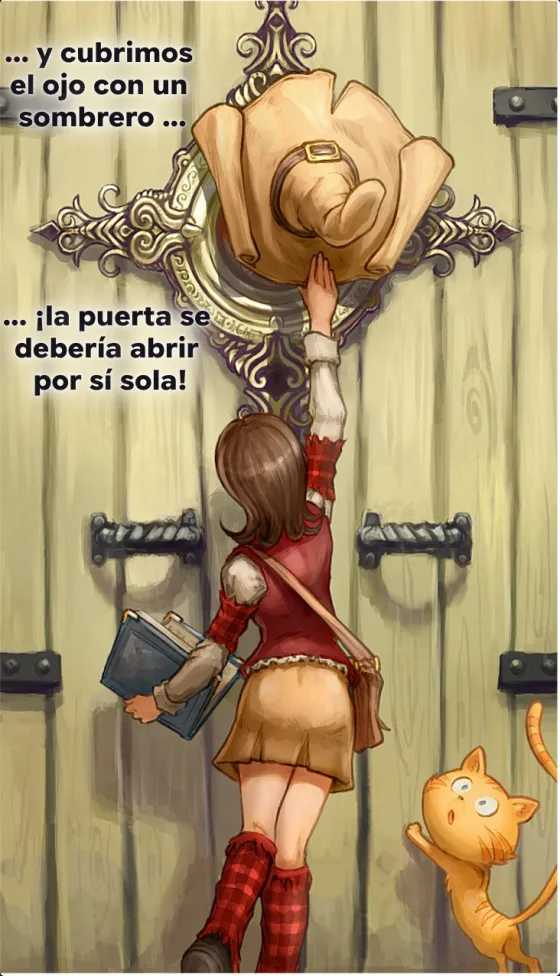
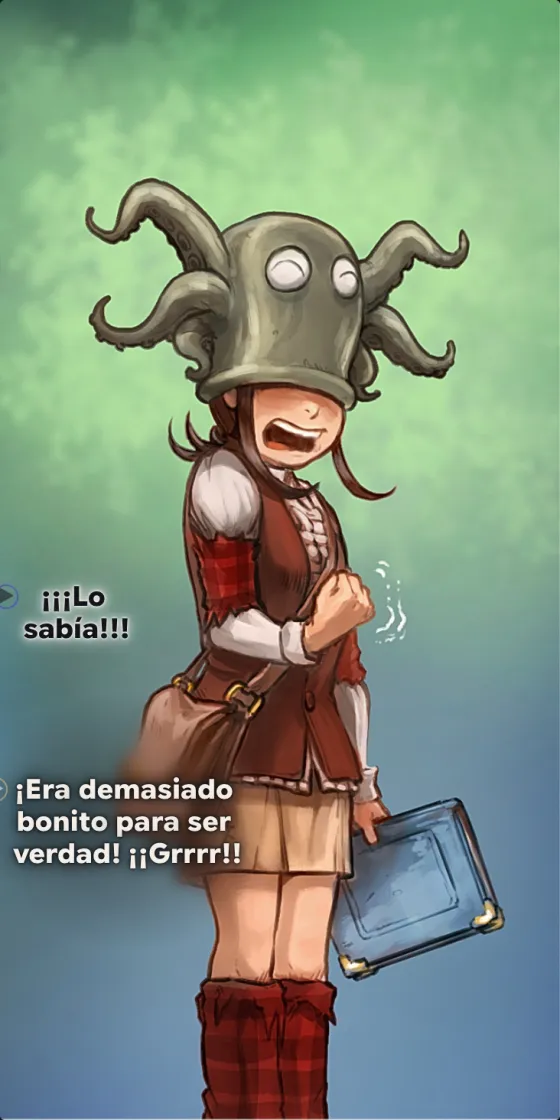
Both panels as they appear in Glossa’s comic reader on a phone. Pepper&Carrot episode 26, “Books Are Great”, by David Revoy (CC BY 4.0), Spanish translation by its volunteer translators.
What to watch out for
- Slang and shortcuts. Speech is clipped and casual: dropped words, contractions, the occasional dialect spelling. That is real language, but don’t copy it into a formal email.
- Sound effects. “PLOP”, “CRIIIC” and friends are drawn, not written. Skip them; they aren’t vocabulary.
- ALL-CAPS lettering. Many comics are lettered in capitals, which hides the difference between a name and an ordinary word, and in German between nouns and everything else.
- Reading order. Most Western comics read panel by panel, left to right and top to bottom, and balloons within a panel in the same order. Manga runs the other way.
- Comics are a start, not the whole road. Dialogue gives you spoken vocabulary but little of the descriptive and narrative language of books. Move on to easy prose once comics feel comfortable; you will keep the words you met in them.
How to read a comic in a new language
- Look at the panel first. Spend a second on who is there and what is happening before you read a word. Then read the balloons and check them against your guess.
- Don’t look up every word. If the picture and the rest of the balloon make the meaning clear, keep going. Look up the words that stop you from following the story.
- Read it out loud. Comic dialogue is written to be spoken. Saying the lines (or listening to them read aloud) trains your ear as well as your eyes.
- Re-read an episode a week later. It will be easier, and that is the clearest proof that the words stayed.
- Pick a series, not a one-off. Familiar characters and settings lower the load on every new episode.
Where to find comics in your target language
Comics you already know in your own language are a good start: a translated album of something you have read lets the story carry you even further. For something free and legal, David Revoy’s Pepper&Carrot is a webcomic about a young witch and her cat, published under a Creative Commons licence and translated by volunteers into dozens of languages.
Comics in Glossa
Glossa is a reading app for real books, and it now has a Comics tab with Pepper&Carrot in every language you can learn in Glossa, plus Mini Fantasy Theater, the same artist’s one-page strips, in English, Spanish, French and German. The comics are read the way Glossa reads a book:
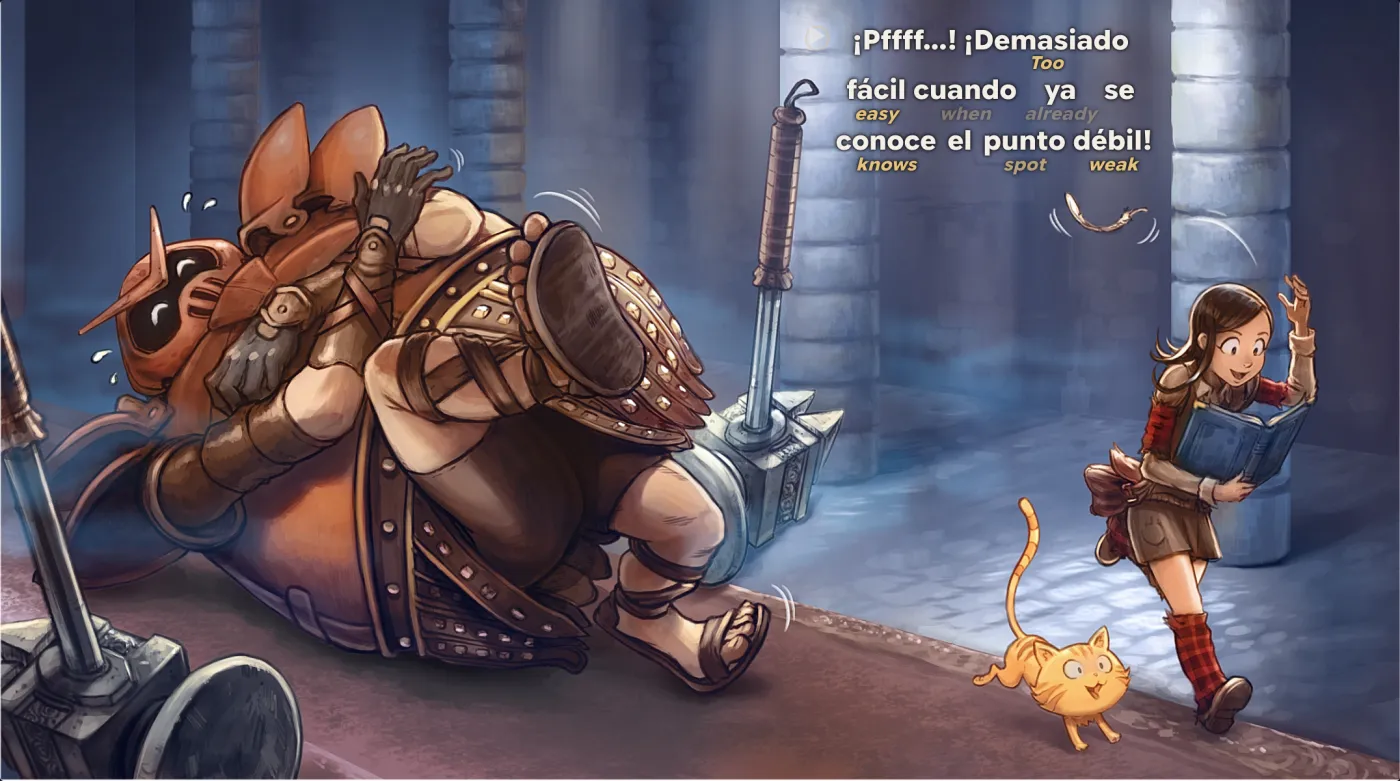
- Glosses inside the art. The dialogue is set into the artist’s text-free pages, with a translation under the words above your level, in your own language. The words you know stay clean: in the panel below, Demasiado fácil gets “Too easy” and punto débil “weak spot”, while el gets none and cuando only a faded one.
- Panel by panel. The reader opens full screen and glides from one panel to the next, so the text stays readable on a phone.
- More or fewer glosses with a swipe. Drag up or down to change how many words are glossed, or press and hold to see every gloss until you let go.
- Tap a word or a balloon. A word opens its card, with pronunciation and audio; a balloon shows the translation of its whole sentence.
- Read aloud. Every balloon can be read by a native-sounding voice, with the spoken word underlined as it goes.
- It adapts. As with books, the number of glosses adjusts to the words you look up and the ones you read past.
Comics are included on the free plan. Switch them on under Account → Personalization → “Comics tab”, and they appear next to your Library.
Free for 2 books and 10 pages of reading.